What Arcjet does
Arcjet integrates with your coding agents (Claude Code, Cursor, Copilot, Codex, etc) or custom agents (JS, TS, Python, Go) to enforce security policies and protect against unsafe actions. It integrates using native SDKs, provider APIs, and hooks.
Coding agent security
Deploy Arcjet using coding agent hooks, OpenTelemetry, and provider APIs e.g. Claude Compliance API to apply security policies in real time. Detect malicious APIs and MCP servers, prevent access to system files, and detect PII leaks. Policies are written using OPA Rego for fine-grained control over agent behavior, whichever coding tool or LLM you use.
Custom agent Guards
Integrate control and security directly into your custom agents using Arcjet's SDKs for JS, TS, Python, and Go. Answer questions like: Which agents are running? Should this action be allowed? What happened, and why?
Real-time threat intel
Stop agents from accessing malicious and risky content, APIs, MCP servers, malware, and websites using Arcjet's real-time threat intel. Every external request made by the agent is analyzed by Arcjet for potential threats and blocked before it reaches its destination.
Prompt injection and sensitive information
Detect prompt injection and screen for PII or secrets in the text an agent is about to process. Sensitive findings can be redacted from retained evidence. Prevent attacks before they reach the LLM, database, or tool.
Bot, abuse, and web application protections
Use the same platform for classic application security: bot detection, rate limiting, Shield WAF, email validation, signup form protection, and request filters.
What makes Arcjet different
In-code decisions, not only at the edge
Arcjet runs inside your handlers and agent loops, so security policies can be evaluated on the full execution context. See tool call arguments, file paths, user session data, and other runtime context that would be invisible to edge-only controls.
Protects actions the network never sees
Tool calls, queued jobs, and fan-out work sit past HTTP. Compared with gateway-style controls such as Cloudflare AI Gateway or Datadog AI Guard observability paths, Arcjet can refuse those actions in process before they execute. Correlation IDs tie decisions in a session for investigation.
Low-latency analysis
Arcjet's SDK bundles a WebAssembly module for local-first analysis. Arcjet's cloud is deployed to over 300 edge locations for low-latency policy evaluation right next to users.
One platform for agents and HTTP
Coding-agent hooks, custom guard() calls, and HTTP protect() rules share one policy and evidence model. Alternatives that only wrap model providers or only sit on inbound HTTP leave the other half of the surface uncovered. Arcjet is built so security and engineering share one control plane for both.
Who uses Arcjet
- Security and platform teams enforcing policy on coding agents (Claude Code, Cursor, Copilot, Codex, etc) across developer laptops and cloud agents.
- Engineering teams shipping custom AI agents, MCP servers, and agentic workflows who need granular guardrails, not just prompt filters.
- B2B SaaS product and platform teams protecting APIs, signup forms, and AI endpoints with identity-keyed rate limits and bot detection.
- Developers who want security primitives as code — testable locally, reviewable in PRs — rather than a network appliance they cannot run in development.
Customers include Checkr, Creem, and JD Group. Arcjet is used by more than 1,000 developers across more than 500 production applications.
The team behind Arcjet
Arcjet Labs, Inc. was founded by David Mytton, CEO. David previously founded Server Density (acquired), co-founded Console (the console.dev newsletter), and researches sustainable computing at the University of Oxford. Follow him on X.
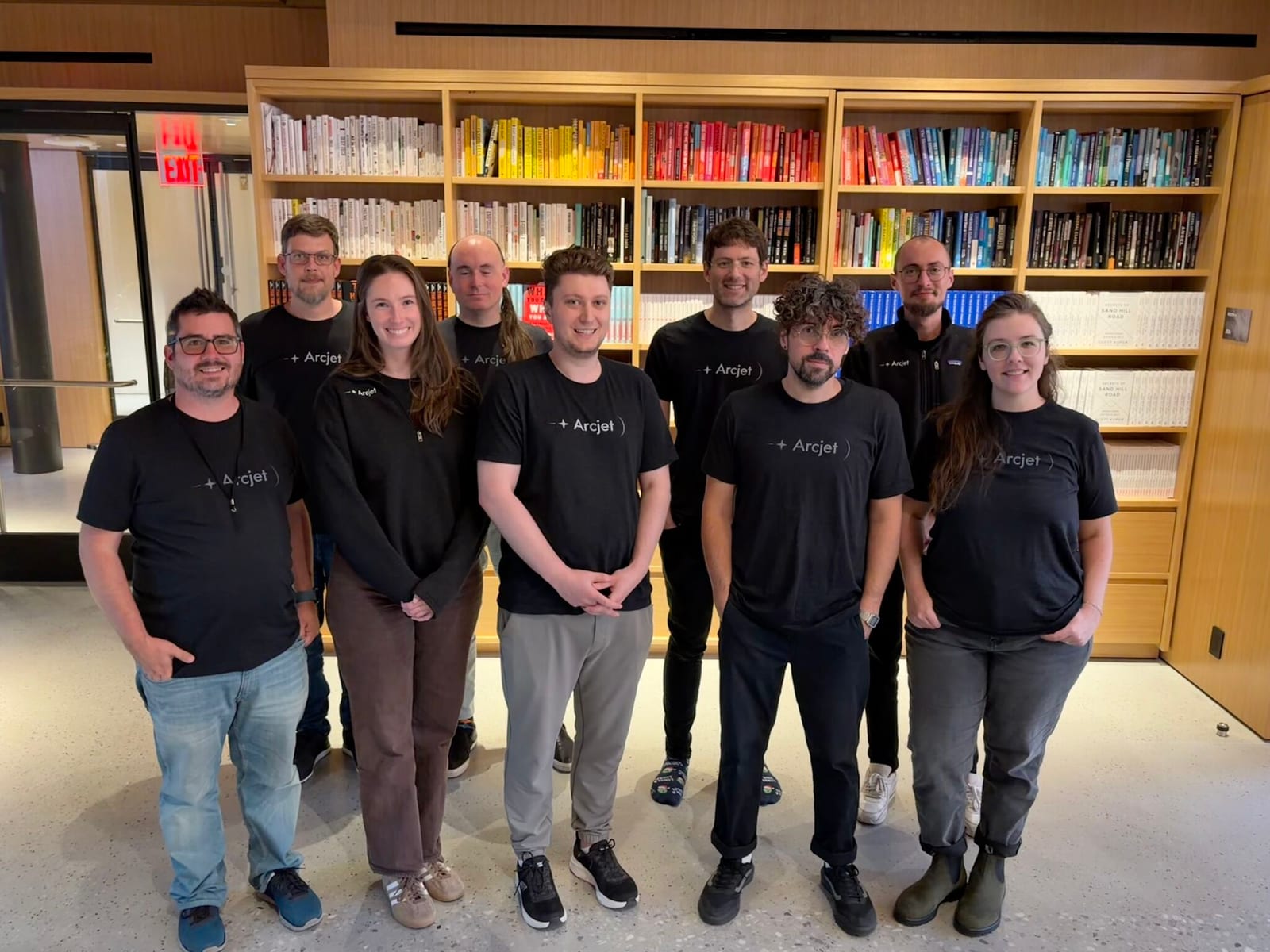
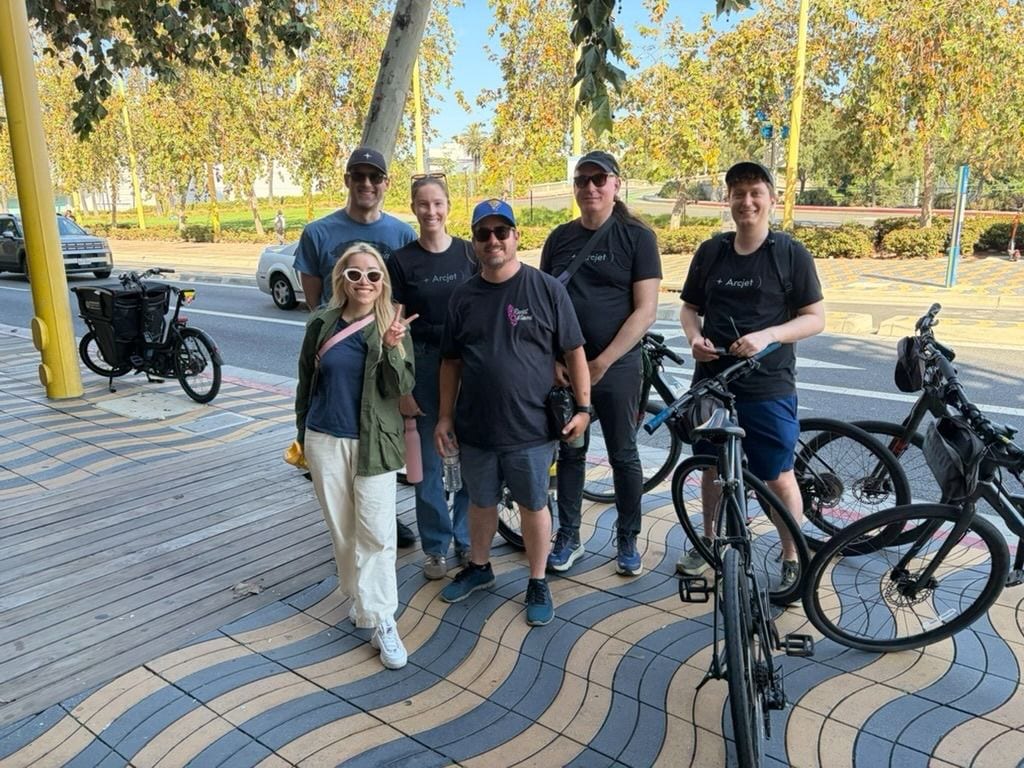
Arcjet started from a simple observation: production security tooling still behaved like network appliances, while developers shipped on Next.js, serverless, and now agents. The company raised a seed round led by Andreessen Horowitz in 2023 and Series A in 2025, with Plural, Seedcamp, and 20+ angels participating. We are a remote-first team of about ten across the US, Canada, and Europe, with a hub in New York's Flatiron district.

Company socials: GitHub, LinkedIn, X, YouTube, Discord.
Key facts
| Company Name | Arcjet (legal name: Arcjet Labs, Inc.) |
|---|---|
| Description | AI agent runtime security and application security platform |
| Founded | 2023 (seed); Series A in 2025 |
| Founder | David Mytton (CEO) |
| Headquarters | San Francisco, CA, USA — with an office hub in New York, NY (Flatiron) |
| Website | https://arcjet.com |
| Core Offering | AI agent runtime security (coding agents and custom agents). Detect prompt injection, authorize agent tool calls, redact PII, and block bots and abuse. |
| Pricing | Individual $25/mo, Startup $299/mo per application, plus usage; Enterprise custom. 15-day free trial; free plan capped at 10,000 requests/month after trial. See pricing. |
| Contact | Email: sales@arcjet.com |
| Competitors | Often compared with Cloudflare, Datadog AI Guard, Runlayer, Onyx, Pillar, and Lakera. See all comparisons. |
| Social | GitHub, LinkedIn, X, YouTube, Reddit, Discord |
Frequently asked questions
What is Arcjet?
Arcjet is an AI agent runtime security platform. Discover the agents running in your organization, enforce policy across every action, prompt, and tool call, and keep the evidence to prove what happened. Detect prompt injection, authorize agent tool calls, redact PII, and block bots and abuse.
Who founded Arcjet?
David Mytton founded Arcjet and serves as CEO. He previously founded Server Density, co-founded Console (console.dev), and writes about developer tools and sustainable computing.
Where is Arcjet based?
Arcjet Labs, Inc. is headquartered in San Francisco and has a physical hub in New York City’s Flatiron district. The team is remote-first across the United States, Canada, and Europe.
How do I get started with Arcjet?
For coding agents, sign up for a free account and follow the instructions for the coding agent you're using. For custom agents, install the Arcjet skill and ask your agent to protect your code with Arcjet. You can also book a demo.
What does Arcjet cost?
Individual is $25 per month and Startup is $299 per month per application, plus usage fees. Enterprise is custom. Every new account gets a 15-day free trial; after that a free plan continues with a 10,000 request monthly cap. Full detail is on the pricing page.
Get started
Put the decision where the action is
Install Arcjet in your app or coding agent, publish a policy, and see allow/deny decisions with the evidence to explain them.